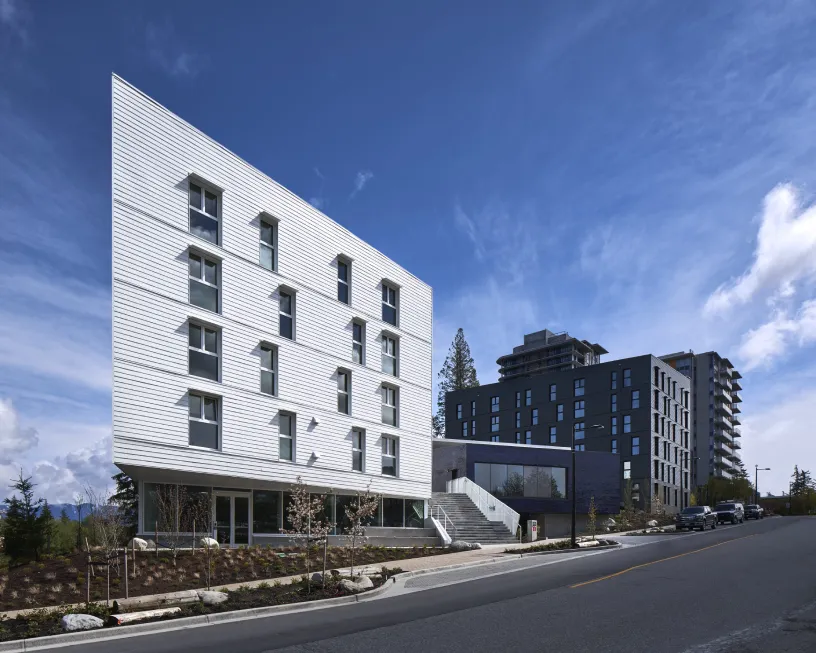
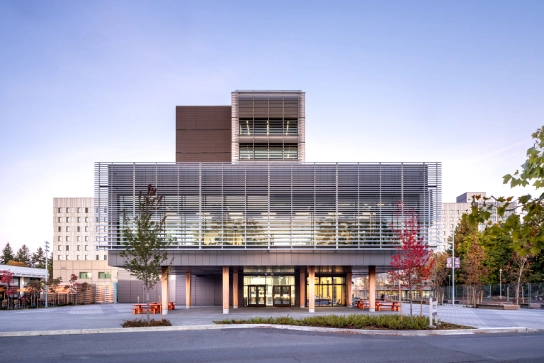
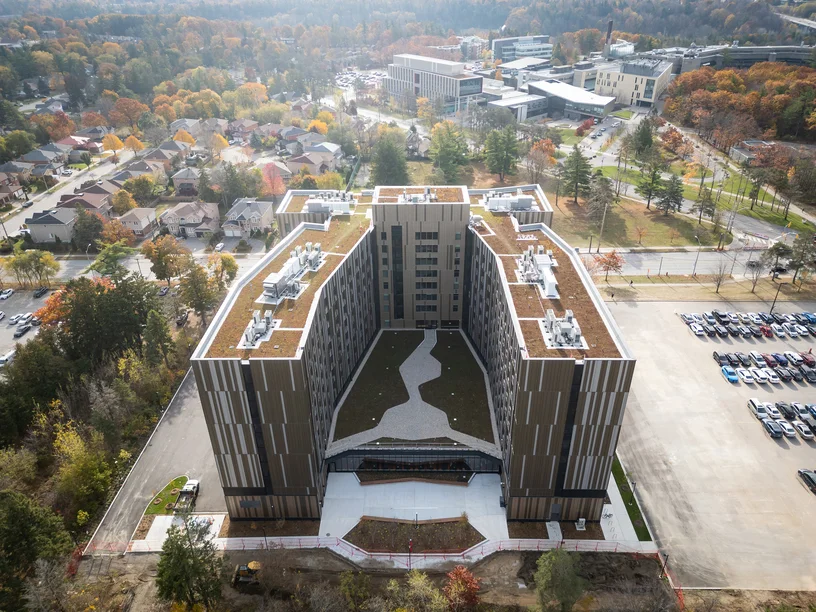
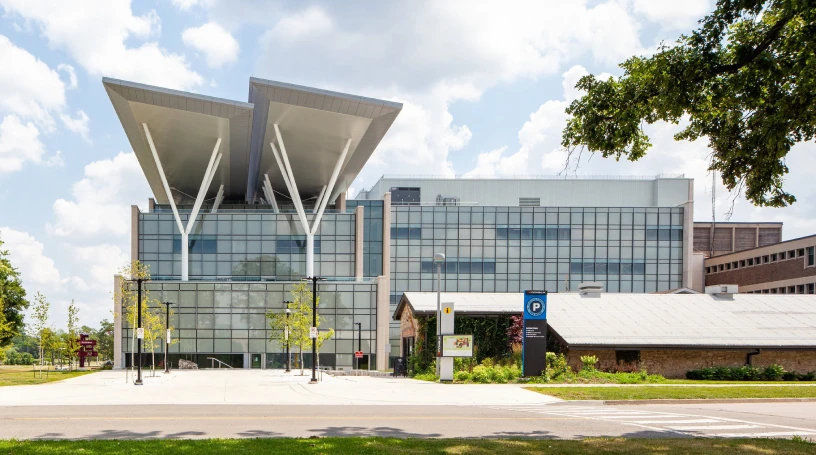
The project is designed to LEED Gold and Rick Hansen Foundation Accessibility Certification standards. The campus is designed to address future sea-level rise through elevated building and site grades and integrated shoreline protection.
The campus combines a wide range of cladding systems: modified bitumen roofing, stone veneer, architectural block, composite aluminum and ceramic panels, prefinished aluminum insulation panels, and multiple curtain wall configurations, including triple-glazed and translucent panel systems. The geometry of the buildings and the configuration of the campus presented interesting performance challenges, as there are several projections and connections that create soffits and transitions between different systems. Each system carries distinct thermal-bridging risks and air-barrier continuity requirements. Coordinating performance across this variety of assemblies on a coastal Nova Scotia site required detailed attention at the assembly and transition levels.
RDH provided building enclosure consulting during design, evaluating thermal performance, reducing thermal bridging, and developing air and vapour barrier strategies. RDH also supported enclosure quality assurance through field reviews during construction.