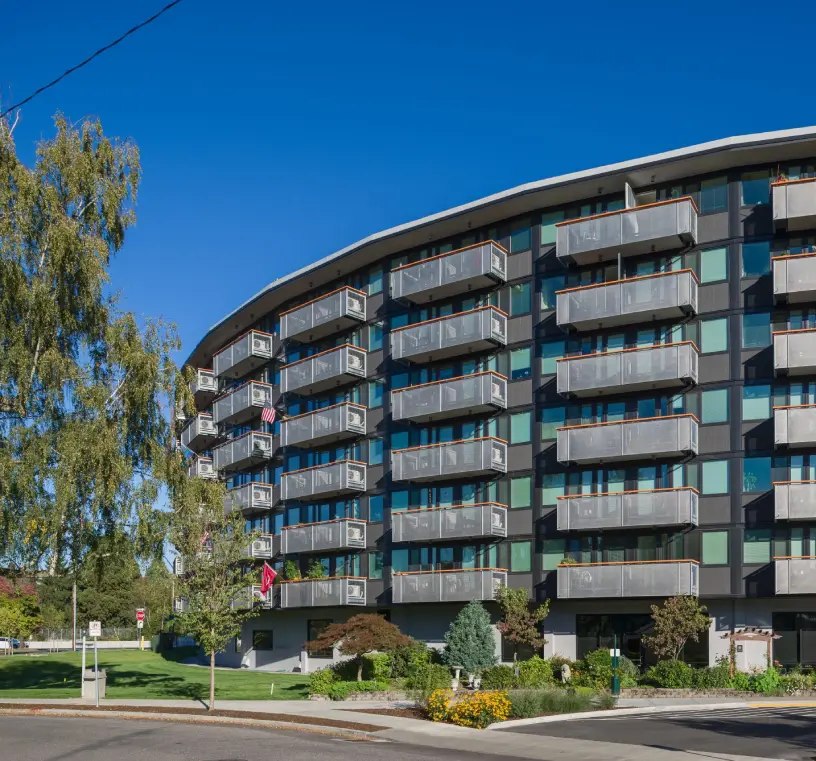
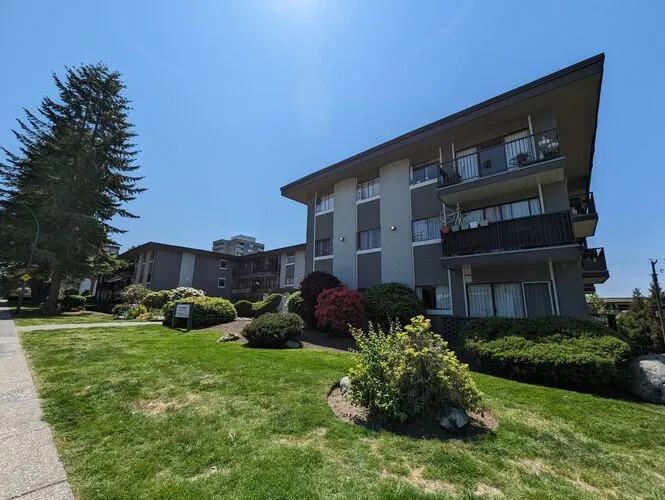
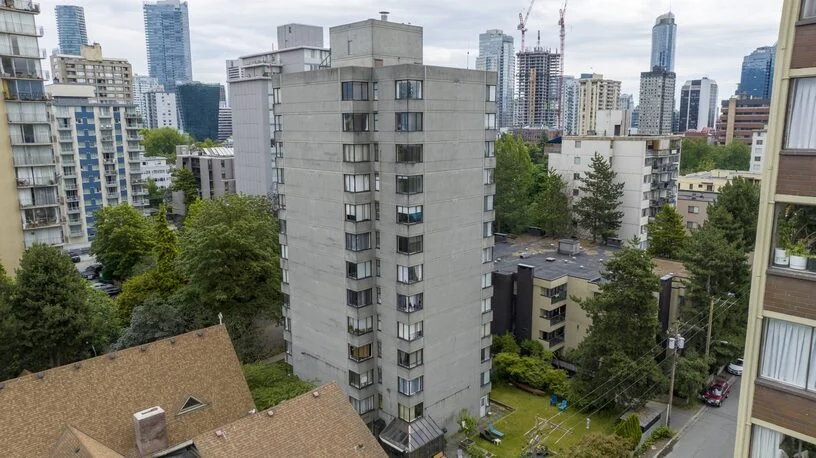
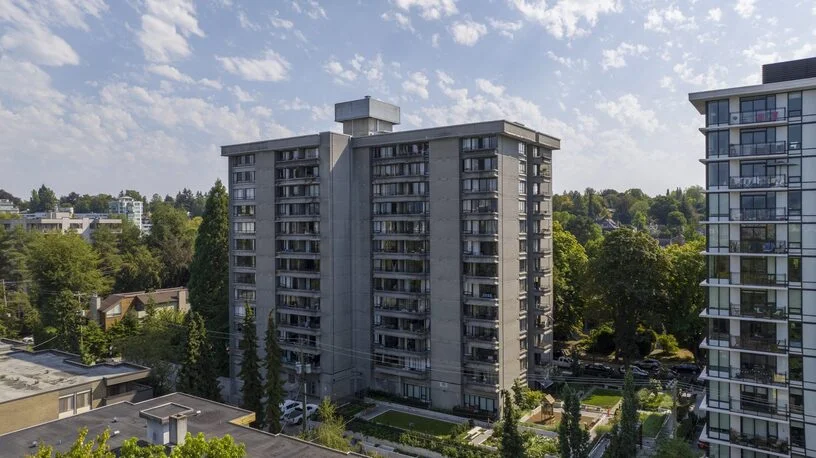
The retrofit addressed the building enclosure and mechanical systems as well as building code and other building renewal needs together as an integrated system. On the building enclosure side, the scope of work included targeted concrete wall repairs, installation of continuous exterior insulation with thermally broken cladding support, new metal panel and stone cladding, high-performance triple-glazed fiberglass windows, replacement of the roof assemblies with increased insulation, and redesign and renewal of amenity spaces including the ground-level solaria. On the mechanical side, the existing gas boilers were replaced with a gas absorption heat pump system paired with a peak-demand boiler, and each suite incorporated direct heat recovery ventilation to deliver fresh air directly into living spaces, and cooling to the common areas.
The retrofit addressed the building enclosure and mechanical systems as well as building code and other building renewal needs together as an integrated system. On the building enclosure side, the scope of work included targeted concrete wall repairs, installation of continuous exterior insulation with thermally broken cladding support, new metal panel and stone cladding, high-performance triple-glazed fiberglass windows, replacement of the roof assemblies with increased insulation, and redesign and renewal of amenity spaces including the ground-level solaria. On the mechanical side, the existing gas boilers were replaced with a gas absorption heat pump system paired with a peak-demand boiler, and each suite incorporated direct heat recovery ventilation to deliver fresh air directly into living spaces, and cooling to the common areas.
RDH served as prime consultant, leading the integrated design team and coordinating the building enclosure, mechanical, electrical, building code and other retrofit strategies as a unified performance system. Post-construction, RDH is continuing efforts to assist with an intensive measurement and verification program monitoring CO2, PM2.5, relative humidity, temperature, hydronic heating demand, ventilation usage, and suite pressure relative to corridor and exterior environments. The project targets a 60%+ reduction in operational emissions and total energy use, and serves as a replicable model for whole-building retrofit of occupied affordable housing.