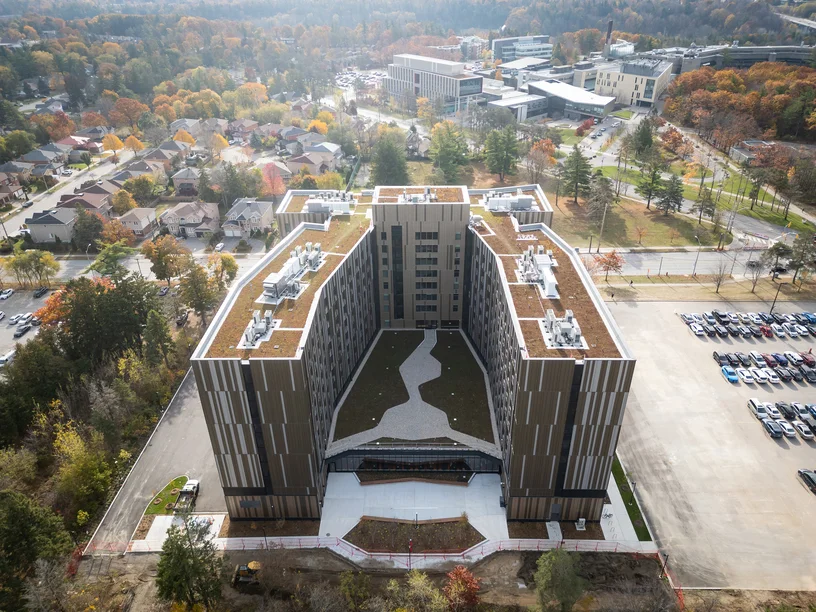
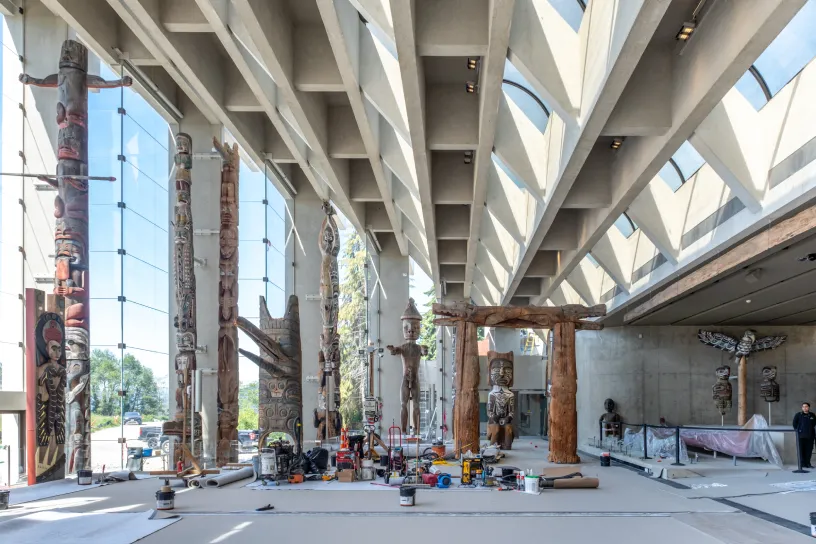
RDH helped the team achieve high-performance enclosure objectives by addressing construction-phase challenges. Before construction began, we led an air barrier detailing training session for the enclosure trades. During construction, RDH’s on-site reviews focused on the air barrier system, including tie-ins between the wall, window, and roofing assemblies. Mid-construction testing helped identify air leakage pathways before enclosure systems were concealed, allowing corrective measures to be implemented and supporting long-term building performance. Final airtightness testing confirmed that the project achieved Passive House air leakage performance of less than 0.6 ACH at 50Pa.
During construction, concerns arose regarding chloride contamination of concrete floor slabs resulting from the use of de-icing salts. RDH investigated the extent of contamination, assessed potential durability risks to embedded reinforcing steel, and developed mitigation strategies to support the long-term performance of the structure. The work included laboratory testing, review of waterproofing approaches, evaluation of corrosion protection measures, and recommendations to help the University understand the associated risks and inform future decision-making regarding the affected concrete elements.
Through our involvement , RDH helped the project team manage technical risks and support the long-term durability and resilience of this important campus facility.