Forensics
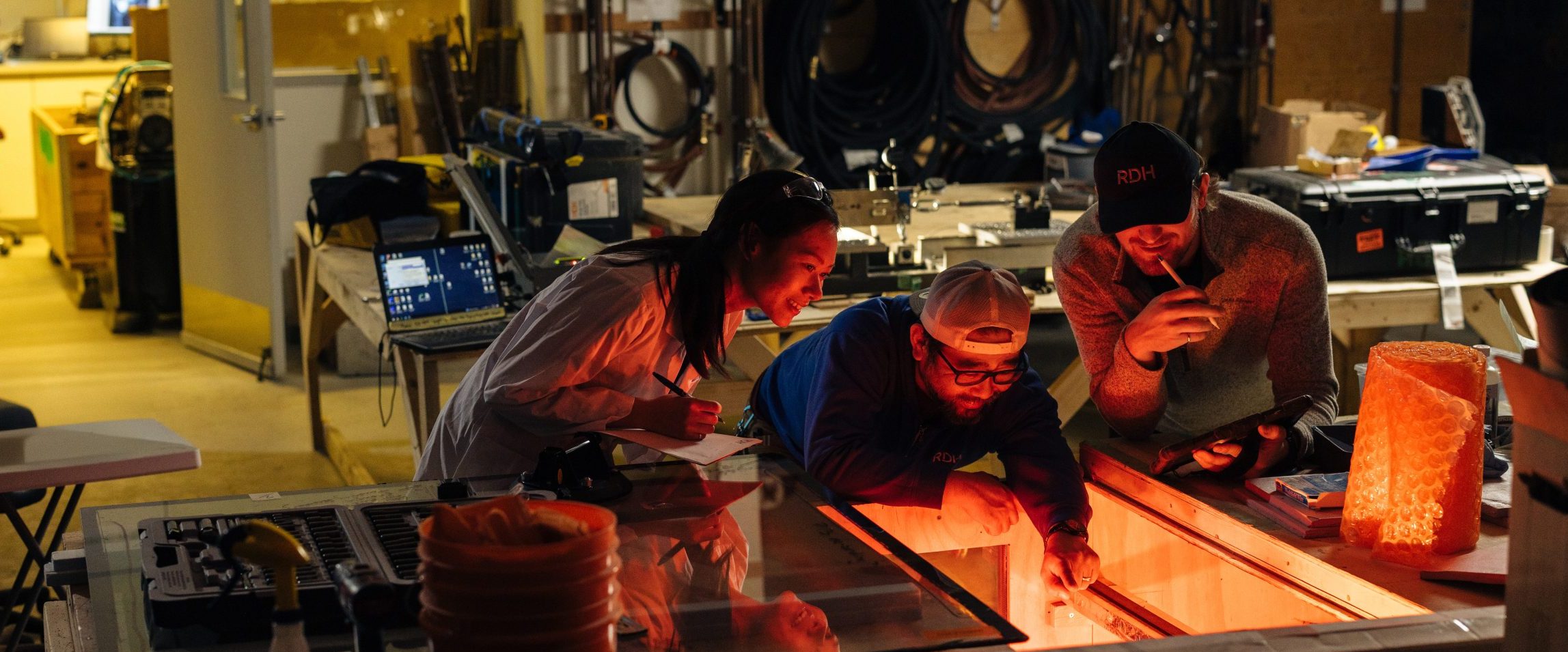
Our forensic services help clients understand and resolve performance issues in existing buildings. We investigate failures, identify root causes, and provide expert support for repair planning, insurance claims, and legal disputes. Drawing on field investigation, material testing, assembly analysis, and documentation review, we clarify what happened, why it happened, and what should be done next.
Our team supports owners, insurers, legal counsel, and design professionals when performance issues arise—from water intrusion and construction defects to structural movement or warranty claims. With multidisciplinary expertise across enclosures, structure, and materials, we inform repairs, guide litigation strategies, and support long-term risk management.
Services
Forensic investigation services help owners, insurers, legal counsel, and design professionals document conditions, identify performance failures, and determine where to focus repair or legal efforts. RDH conducts detailed field investigations using a combination of testing, imaging, and construction record review to build a clear, evidence-based picture of what went wrong.
- Investigation and assessment documents conditions and identifies areas of failure or concern through field review and targeted testing.
- Drone-assisted documentation captures high-resolution imagery in difficult or unsafe locations to support analysis and evidence gathering.
- Moisture diagnostics and leak tracing pinpoints the source, path, and extent of water infiltration through field diagnostics and testing.
- Construction record review analyzes drawings, submittals, RFIs, and field reports to evaluate construction accuracy and identify deviations.
- Infrared and visual imaging supports non-destructive evaluation of thermal bridging, air leakage, and moisture pathways.
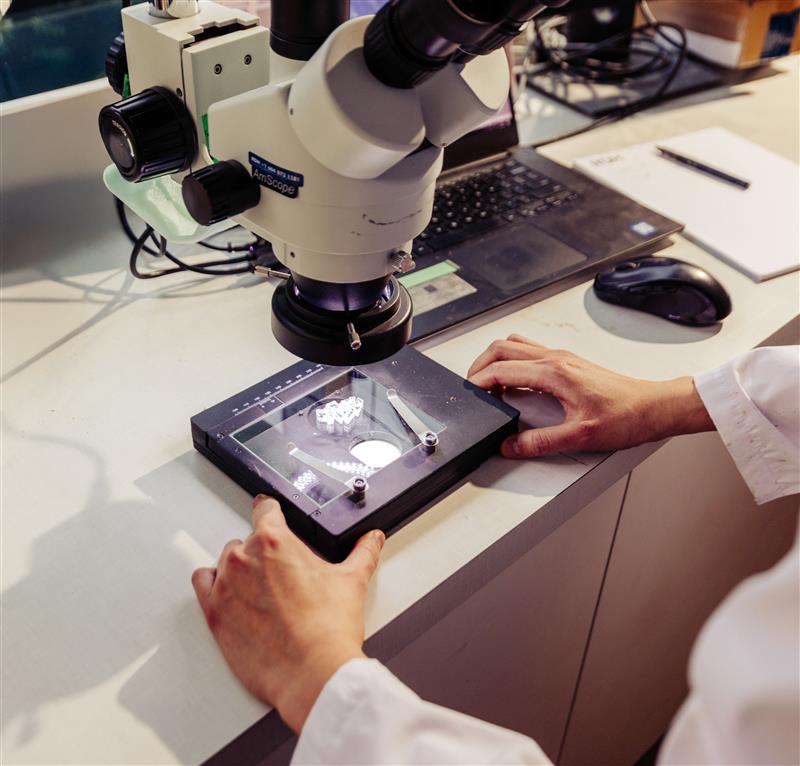
Forensic analysis services examine the physical and technical evidence behind building failures to identify root causes and contributing factors. RDH integrates lab testing, simulation, and multidisciplinary expert review to develop defensible conclusions that support repair planning, litigation, and insurance resolution.
- Material and component testing evaluates durability, degradation, or failure under expected use conditions.
- Assembly performance evaluation compares actual field behavior to intended design performance.
- Root-cause hypothesis development synthesizes test results, field data, and documentation to develop causation scenarios.
- Thermal, hygrothermal, and structural modeling simulates failure mechanisms and evaluates alternative explanations.
- Multidisciplinary system review brings together enclosure, structural, and materials expertise to assess interconnected failures.
Litigation and claims support services provide expert technical assistance for legal proceedings, insurance claims, and construction disputes. RDH develops reports, visual exhibits, and testimony structured to communicate findings clearly to legal and non-technical audiences and withstand scrutiny.
- Expert report preparation summarizes technical findings and conclusions for legal and insurance audiences.
- Trial testimony and deposition support prepares visual exhibits, expert summaries, and testimony for legal proceedings.
- Claims analysis and consulting provides independent technical evaluation to support owners, insurers, or attorneys.
- Visual aids and technical exhibits translate technical data into accessible formats for claims resolution and court presentation.
- Construction delivery method analysis assesses project delivery structure to help attribute responsibility across parties.
- Delay and defect evaluations quantify construction defects and delays to support legal or financial resolution.
Standard of care reviews assess whether project teams met professional, technical, and regulatory expectations. RDH evaluates design intent, code compliance, and alignment with accepted peer practice to support legal proceedings, insurance assessments, or internal quality reviews.
- Code and standard interpretation evaluates construction against the codes and regulations in effect at the time of execution.
- Assessment of design vs. built conditions compares actual construction to approved documentation to identify deviations.
- Peer practice comparisons assess alignment with accepted professional norms and industry standards.
- Review of documentation and delivery methods evaluates the clarity, coordination, and constructability of project documentation.
Scope and conflict resolution services support clients in resolving disputes about project roles, documentation gaps, and construction scope. RDH provides neutral technical guidance, identifies misalignments between drawings, contracts, and expectations, and facilitates informed resolution for owners, design teams, and contractors.
- Technical facilitation and mediation provides neutral, informed guidance to resolve technical disagreements between project parties.
- Scope gap analysis identifies disconnects between drawings, contracts, and stakeholder expectations.
- Review of change orders, RFIs, and roles clarifies the source and responsibility for scope changes or project impacts.
- Pre- and post-construction alignment support helps teams align goals, documentation, and expectations before or after construction.
Forensic consulting for historic and heritage buildings applies investigative tools and methods appropriate to legacy materials and traditional construction. RDH evaluates existing assemblies, identifies performance issues, and develops repair strategies that respect preservation goals while addressing durability and long-term performance.
- Heritage building investigation evaluates existing assemblies and conditions using methods appropriate to legacy materials and construction systems.
- Stabilization of elements identifies urgent interventions to protect fragile heritage materials or structures from further deterioration.
- Collaboration with agencies and preservation authorities coordinates repair strategies with regulatory and heritage oversight bodies to support approval and compliance.
- Integration of forensic findings aligns investigation results with long-term preservation goals and repair scope.