Building Enclosure Consulting
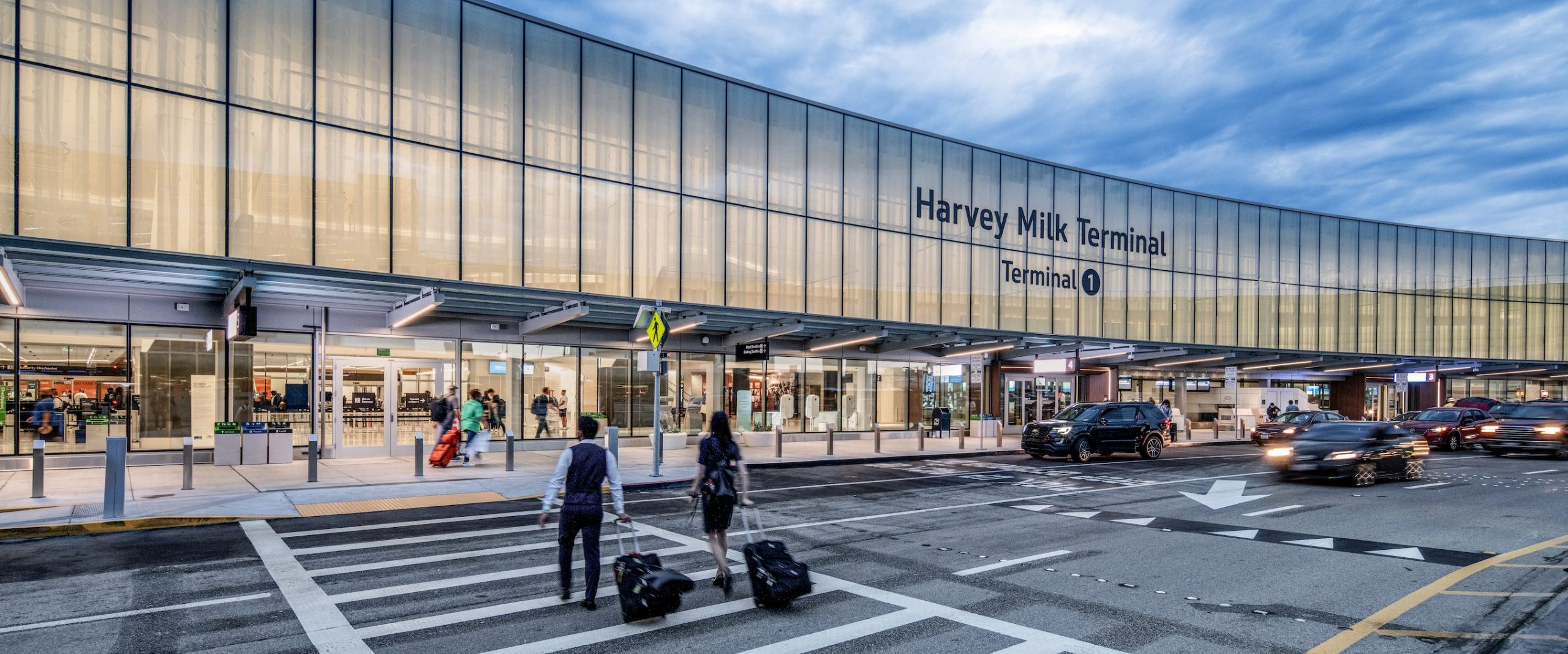
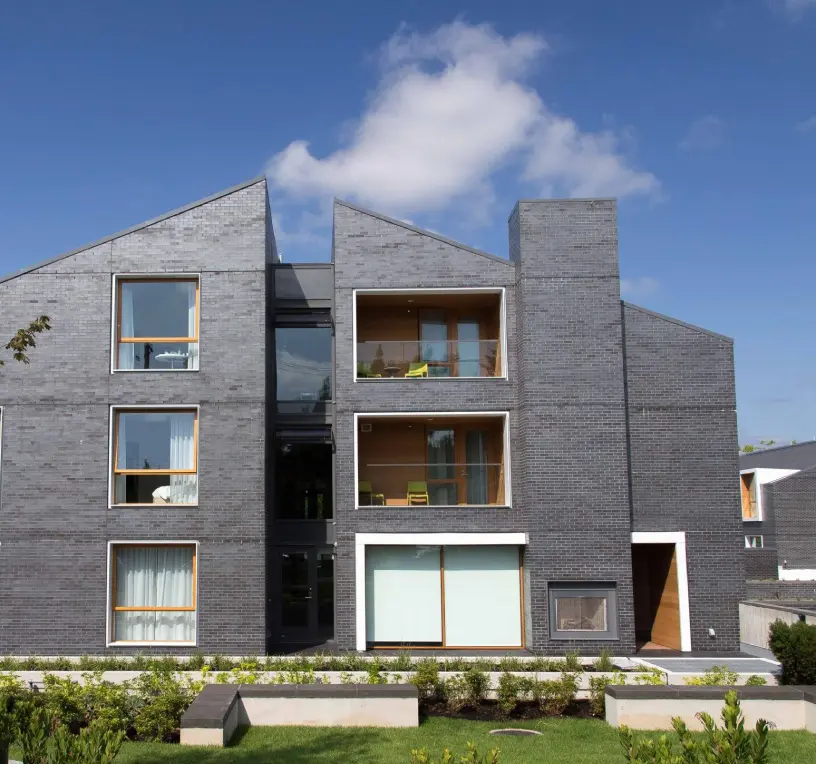
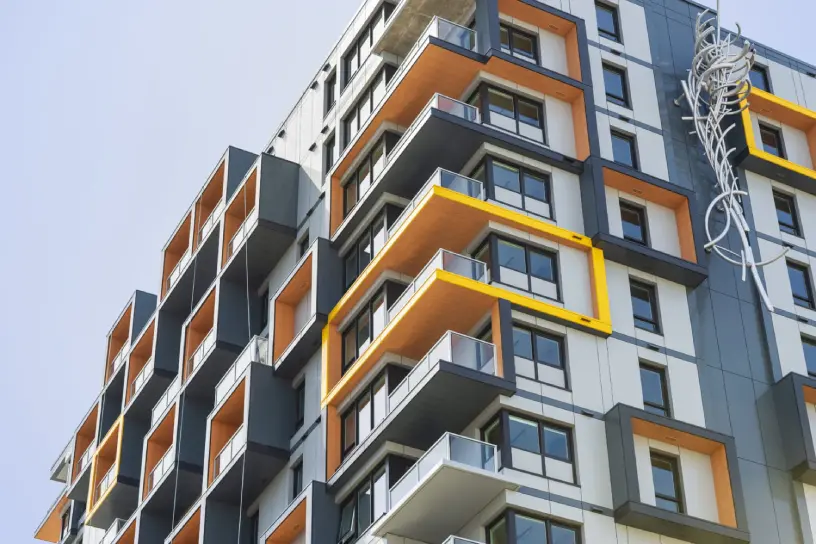
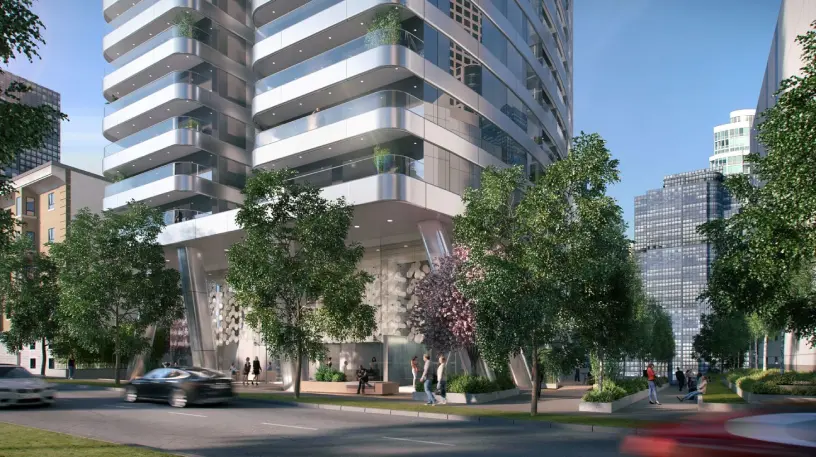
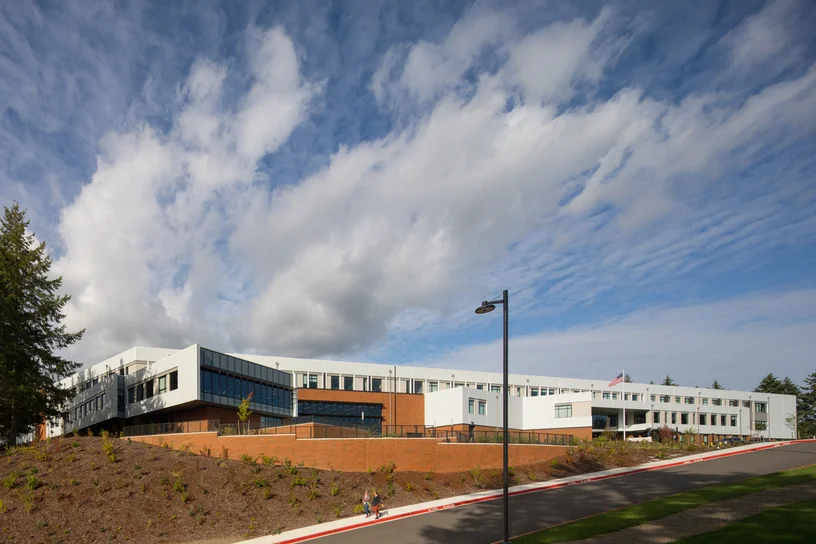
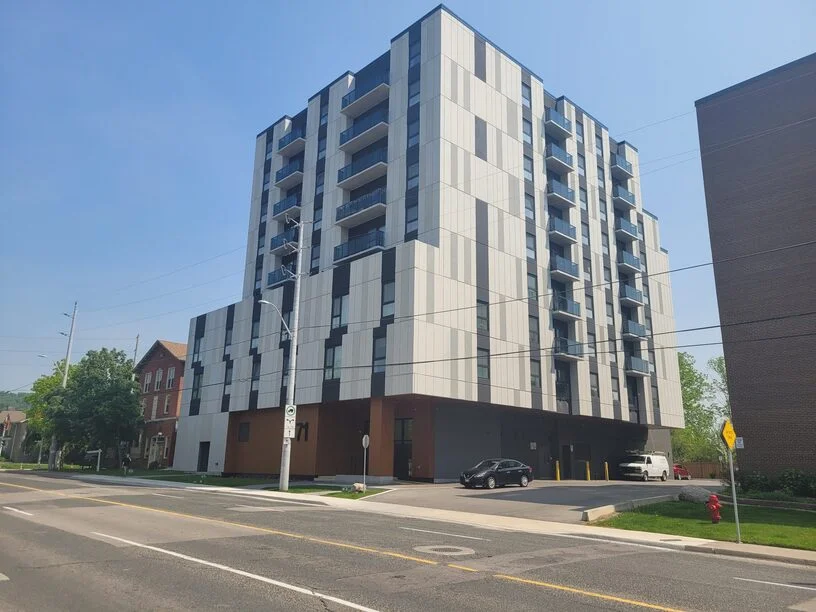
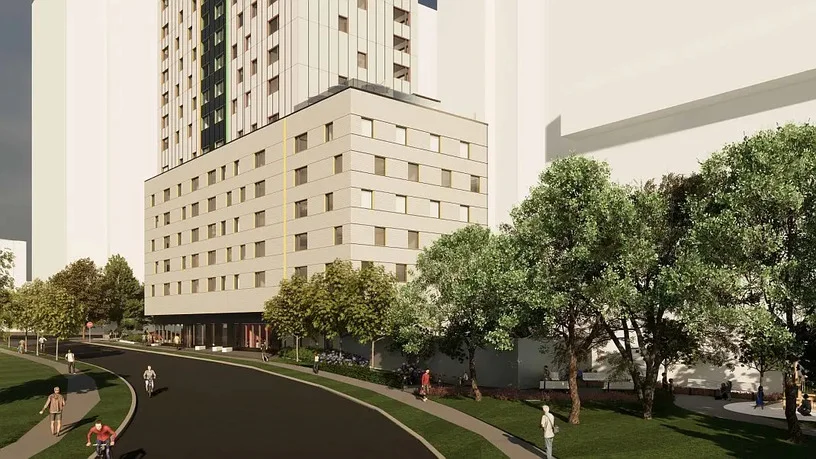
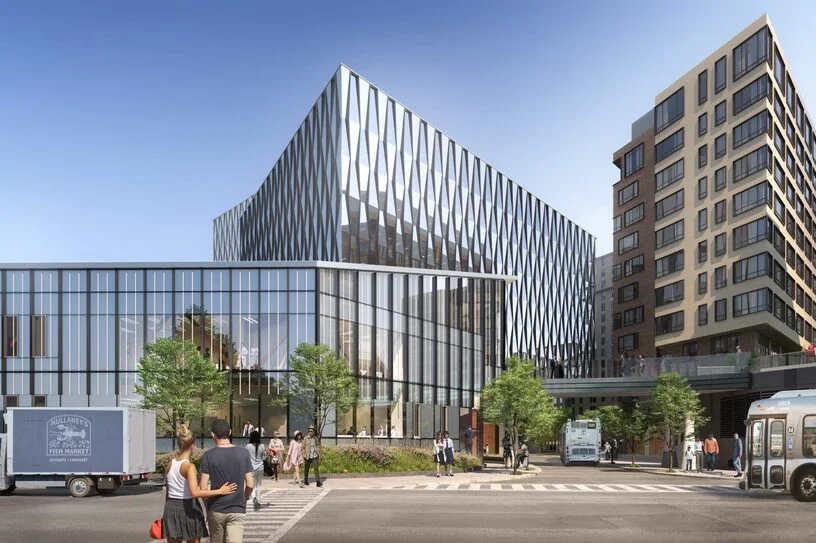
Building enclosure consulting is foundational to RDH’s work. Our teams support the performance, durability, and constructability of the systems that separate indoors from outdoors. From roofs and walls to glazing and below-grade waterproofing, we help design teams, developers, owners, property managers, and HOAs/strata councils navigate enclosure decisions that directly impact comfort, energy use, and long-term resilience.
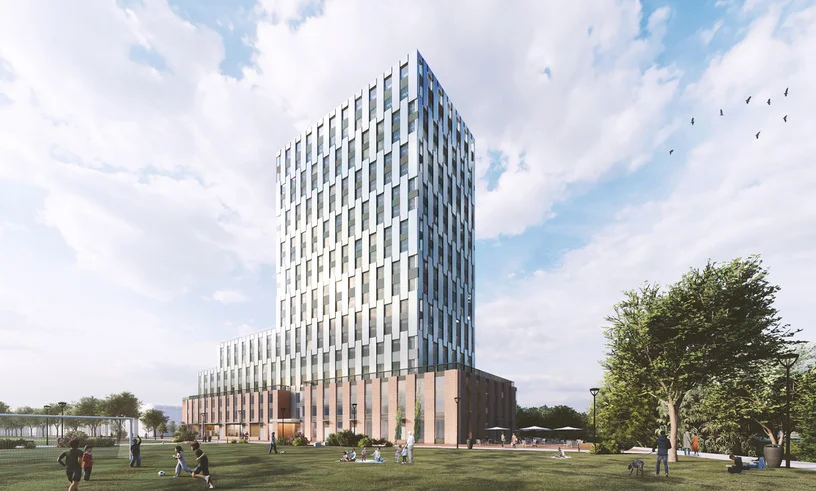
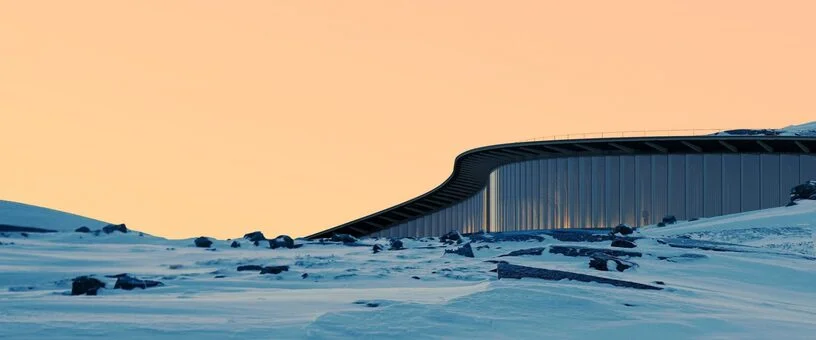
Our services span the full building lifecycle—from early design and detailing through construction-phase reviews, commissioning, and renewal planning. Our teams help clients meet regulatory requirements such as California Title 24, the BC Energy Step Code, Toronto Green Standard, and CAGBC’s Zero Carbon Building Standard. We bring particular value when engaged early, aligning enclosure strategies with project goals, codes, and constructability. Whether supporting new construction or upgrades to existing or historically significant buildings, we turn complex building science into actionable solutions.
Services
Design consulting for building enclosures focuses on selecting and detailing systems that balance long-term performance with architectural intent and construction methods. RDH supports design teams from schematic phase through construction documentation, providing guidance on system selection, material compatibility, and the continuity of control layers, including air, water, thermal, and vapor barriers. Our work addresses climate-specific considerations such as condensation risk and thermal bridging to inform enclosure strategies that are constructible and code-aligned.
- Early-phase input covers system selection, detailing approaches, and how to align decisions with performance objectives before commitments are locked in.
- Interface and transition analysis supports continuity of control layers across the full enclosure, addressing the connections between assemblies where failures most often originate.
- Thermal and moisture control strategy reviews condensation risk, material compatibility, and climate-specific variables to inform high-performance detailing.
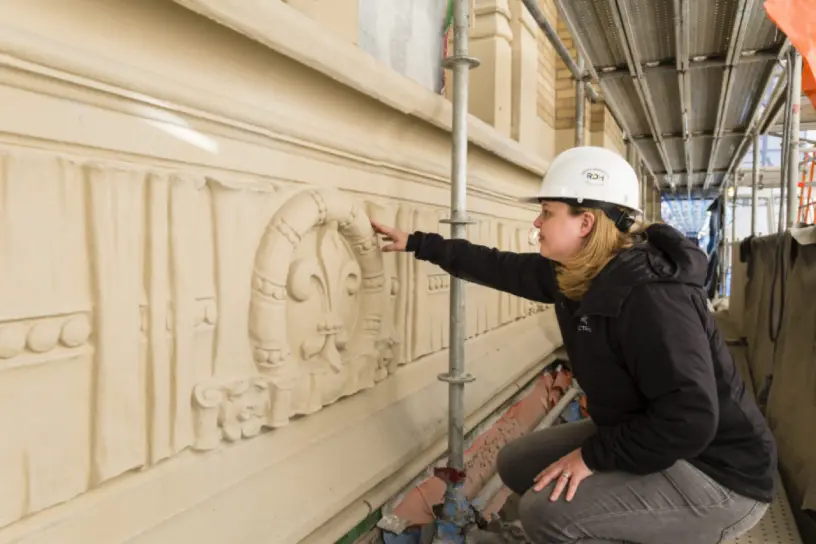
Building enclosure investigation and assessment services evaluate existing conditions through targeted field review and diagnostic testing. RDH investigates a wide range of enclosure systems, from walls and roofs to glazing and below-grade waterproofing, to identify performance deficiencies, moisture accumulation, water intrusion, and deterioration. Findings are organized into clear deliverables that support repair planning, capital decisions, and risk management.
- Visual assessments document observed conditions to highlight signs of distress, deterioration, or risk in exterior assemblies.
- Invasive assessments reveal concealed construction details by performing selective openings and validating existing conditions against design intent.
- Leak investigation applies field diagnostics to pinpoint the origin and path of water intrusion, with a focus on identifying targeted remediation options.
- Moisture investigation quantifies moisture levels and maps accumulation patterns to understand potential sources and impacts across the enclosure.
- Condition reviews summarize system performance and flag priority areas for repair, replacement, or ongoing monitoring.
- Assessment reports organize findings, testing data, and recommendations into concise deliverables tailored to client decision-making.
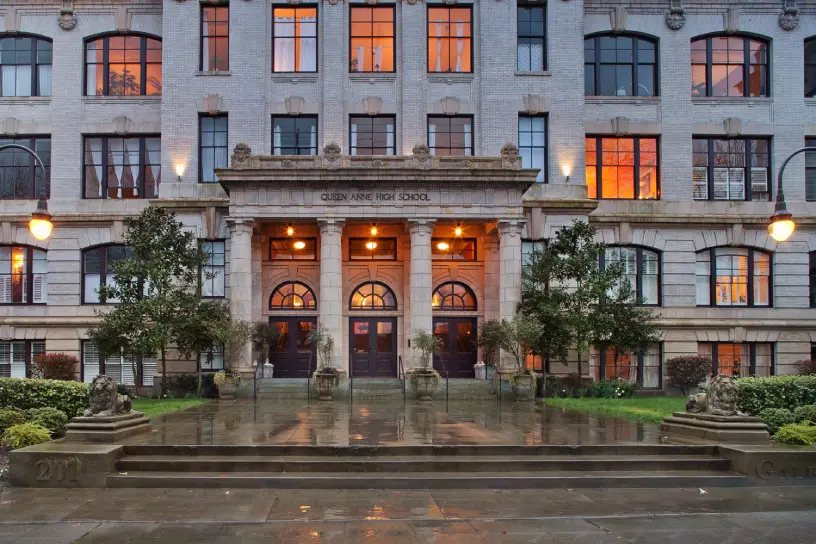
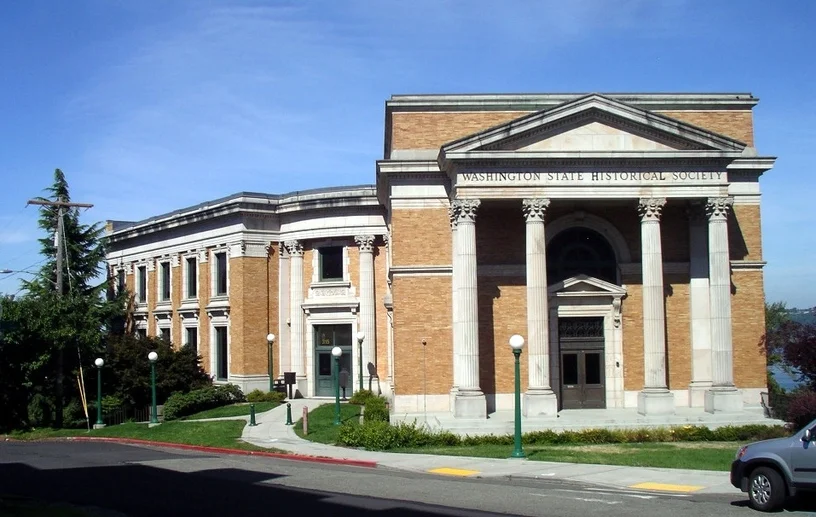
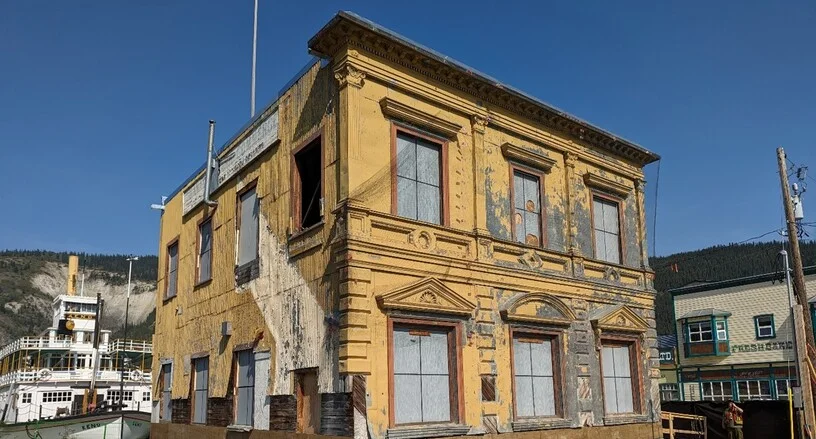
Historic and heritage enclosure consulting helps clients address performance and durability challenges in culturally significant buildings without compromising their visual identity or material character. RDH applies building science expertise to legacy systems, analyzing traditional assemblies, evaluating material compatibility, and developing conservation strategies that align with local heritage policies. This work bridges modern performance expectations with the constraints of legacy construction methods and materials.
- Traditional assembly review analyzes legacy construction techniques to understand current performance implications and inform preservation decisions.
- Compatibility and performance consulting provides guidance on repair materials and upgrade options suited to original construction while meeting heritage requirements.
- Conservation strategy support develops enclosure improvement recommendations within the framework of local heritage policies and conservation principles.
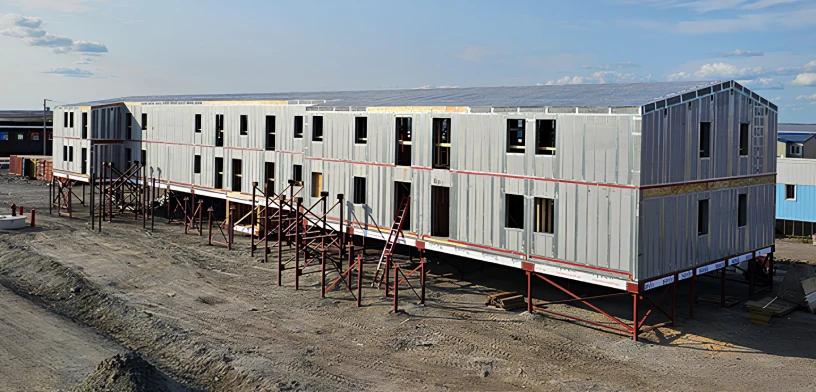
Building enclosure commissioning (BECx) is a structured process that validates whether enclosure systems perform as intended, from design through construction. RDH aligns its BECx services with ASTM E2947 and NIBS Guideline 3 to support owner requirements, code obligations, and third-party verification under programs such as LEED, CAGBC Zero Carbon Building, and WELL. Our scope spans commissioning plan development through field testing and final performance reporting.
- Commissioning plan development defines roles, scope, and verification methods to confirm that design intent is achieved during construction.
- Field testing coordination manages the scheduling and technical oversight of testing activities, including mockups, air and water infiltration tests, and thermographic scans.
- Performance verification and reporting consolidates test results and field observations into a final record confirming that enclosure systems meet specified criteria.
Roofing and waterproofing consulting services address the design, assessment, and renewal of horizontal and below-grade assemblies. RDH evaluates membrane integrity, drainage function, and transitions between systems to identify existing or potential problems, and provides repair and replacement strategies grounded in construction method and material considerations. Services support both immediate remediation and long-term capital planning.
- Assembly design review evaluates roof and waterproofing assemblies for long-term performance, with attention to constructability and integration with adjacent systems.
- Condition assessment inspects membrane integrity, drainage function, and transitions to identify deterioration or risk.
- Repair planning outlines actionable, durable repair strategies based on investigation findings and material considerations.
- Replacement planning establishes phased or full-system replacement approaches to address assemblies at or near end of service life.
Wildfire-resilient enclosure consulting evaluates a building’s exposure to ember intrusion, radiant heat, and direct flame, and translates that exposure into enclosure design and material recommendations for new construction and retrofits in wildfire-prone regions. RDH reviews project conditions against applicable wildland-urban interface codes and guidance documents, including California Building Code Chapter 7A, Washington’s WUI Code, and Canada’s National Guide for Wildland-Urban Interface Fires, and identifies enclosure elements that warrant closer attention during design or renovation.
Exposure and Vulnerability Assessment. Evaluates site conditions, surrounding vegetation and defensible space, and adjacent structures to characterize wildfire exposure around the building.
Material and Assembly Selection. Reviews roofing, siding, windows and doors, decking, eaves, and soffit assemblies for ignition resistance, informed by RDH’s in-house testing and forensic experience.
Vent and Opening Protection. Assesses vents, glazing, and exterior openings for ember intrusion risk.
Code and Guidance Review. Reviews project documentation against WUI-specific codes, guidance documents, and local amendments.
Design and Field Review. Provides detail review, drawing markups, and construction-phase field review to support continuity of the wildfire-resistant strategy through construction.
Forensic investigation services support building owners, insurers, and legal teams when enclosure failures occur. RDH applies field observation, diagnostic testing, and construction record review to trace performance failures back to their source and develop defensible root cause analysis. Findings support targeted repair planning and, where needed, expert witness testimony for litigation, arbitration, or insurance proceedings.
- Investigation of performance failures uses field observation, testing, and design record review to identify the source and contributing factors of enclosure failures.
- Root cause hypothesis and analysis connects physical symptoms to technical mechanisms or construction sequencing problems, synthesized into documented conclusions.
- Expert witness support prepares defensible reports, visual exhibits, and testimony for litigation, arbitration, or insurance claims.
Litigation and claims support services assist legal teams, building owners, and insurers in resolving disputes related to construction defects, water intrusion, and material failure. RDH reviews technical documentation, prepares annotated plans and photographic evidence, and provides analysis that clarifies scope and supports informed negotiations. Work is structured to communicate findings clearly to both technical and legal audiences.
- Claims review analyzes supporting documents to assess validity, clarify technical scope, and identify contributing factors.
- Technical documentation produces annotated plans, photographic evidence, and reconstructed timelines that illustrate cause and effect.
- Deposition and legal testimony support prepares technical insight and communication materials for court proceedings or settlement discussions.
Specifications and procurement services support the development of clear, coordinated construction documents for enclosure systems. RDH drafts and reviews project manuals to reflect constructability, product compatibility, and enclosure performance priorities, helping project teams improve pricing accuracy and reduce ambiguity through bidding and award.
- Technical specification drafting develops performance requirements, sequencing protocols, and product standards for enclosure-related work.
- Tender review assesses bid submissions for technical compliance and alignment with design documentation.
- Bidding support responds to bidder questions and supports evaluation of contractor qualifications based on scope-specific expertise.
Applied analytics services use simulation and modeling to provide data-driven insight into enclosure performance. RDH applies hygrothermal modeling, thermal bridging analysis, and enclosure performance simulation to help design teams evaluate risk, compare assembly options, and meet energy code and moisture-related requirements. These tools are particularly valuable for high-performance projects and climate-specific design challenges.
- Hygrothermal modeling simulates heat and moisture transfer under realistic climate and building use conditions to evaluate condensation risk and long-term durability.
- Thermal bridging analysis identifies high-conductivity details and quantifies energy losses to inform design modifications, with alignment to codes such as California Title 24 and the BC Energy Step Code.
- Enclosure performance simulation assesses thermal efficiency, air and water tightness, and condensation potential across assemblies to guide design refinement.
Resilience and adaptation services help design teams and building owners evaluate and address climate-related risks, from overheating and extreme weather to wildfire exposure and long-term climate shifts. RDH translates climate projection data and hazard exposure into project-specific design criteria, system recommendations for building enclosure, mechanical, electrical, and plumbing systems, and adaptation strategies grounded in both future climate data and practical risk mitigation.
- Climate risk and resiliency consulting integrates hazard exposure, enclosure performance, and mechanical system reliability to evaluate building vulnerability under projected climate conditions.
- Wildfire-resilient enclosure consulting recommends assemblies and detailing, including roofing, windows/doors, siding, and venting, to address ember intrusion, ignition risk, and fire spread in fire-prone regions.
- Climate hazard guidance translates climate projection data into project-specific design criteria.
- Thermal comfort and overheating analysis assess occupant comfort and overheating risk under current and future climate scenarios to inform building enclosure and mechanical design for passive and active cooling strategies.
- Cooling system planning and retrofit implementation supports the evaluation, design, and delivery of new cooling or air-conditioning systems in buildings without existing cooling to address overheating, occupant comfort, and future climate conditions.
Field testing supports building enclosure performance verification, construction QA/QC, and targeted investigation across new and existing buildings. These building enclosure testing services are planned and coordinated to align with project milestones, with clear documentation provided to inform design decisions, troubleshoot issues, and validate construction.
- Whole-building airtightness testing and targeted air leakage assessments evaluate enclosure continuity and identify areas of concern.
- Water penetration testing using spray rack and chamber methods verifies resistance to water intrusion at windows, walls, and other enclosure assemblies.
- Infrared thermography scanning identifies thermal anomalies, air leakage pathways, and moisture-related conditions non-destructively.
- Tracer smoke testing and electronic leak detection locate air leakage paths and moisture infiltration points with precision.
- Adhesion and pull-off testing evaluates the bond strength of applied materials and coatings under field conditions.
- Moisture assessments document the conditions across enclosure assemblies to support diagnosis and repair planning.
Related
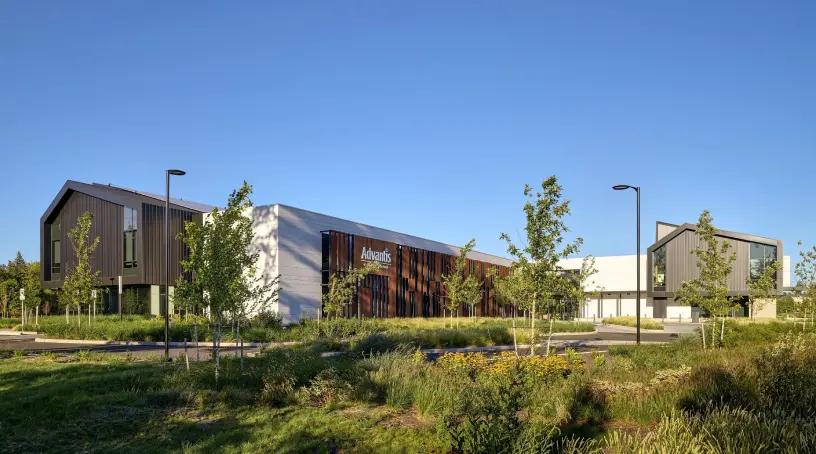
Advantis Credit Union Corporate Headquarters
Oregon City, OR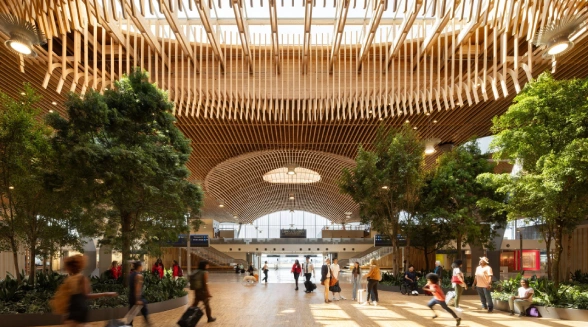
Portland International Airport Main Terminal
Portland, OR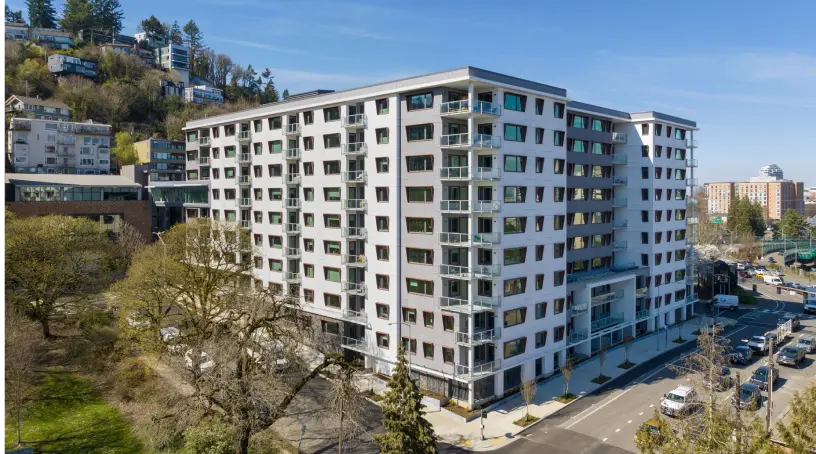
Parkview at Terwilliger Plaza
Portland, OR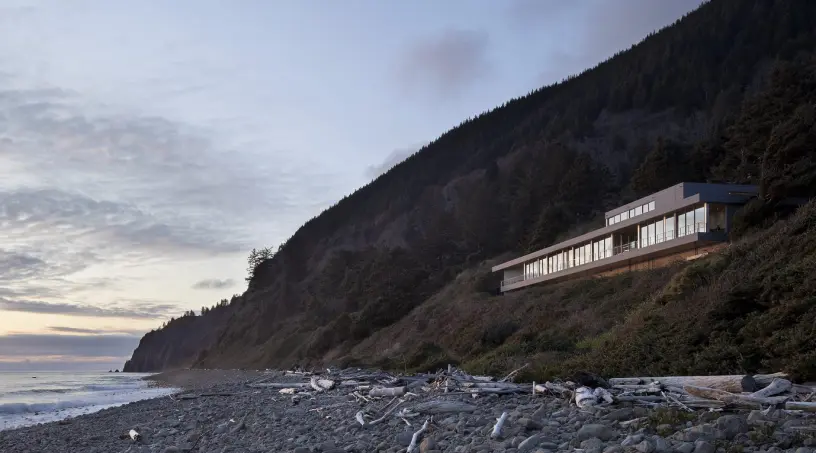
Prow House
Manzanita, OR
Hattie Redmond Apartments
Portland, OR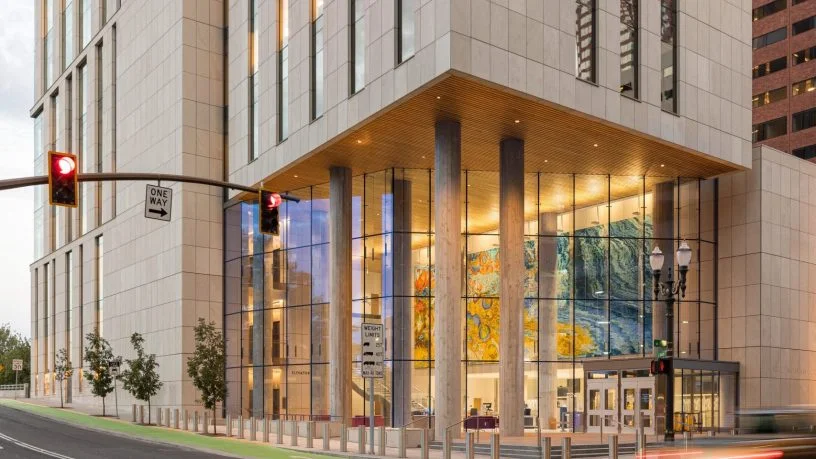
Multnomah County Central Courthouse
Portland, OR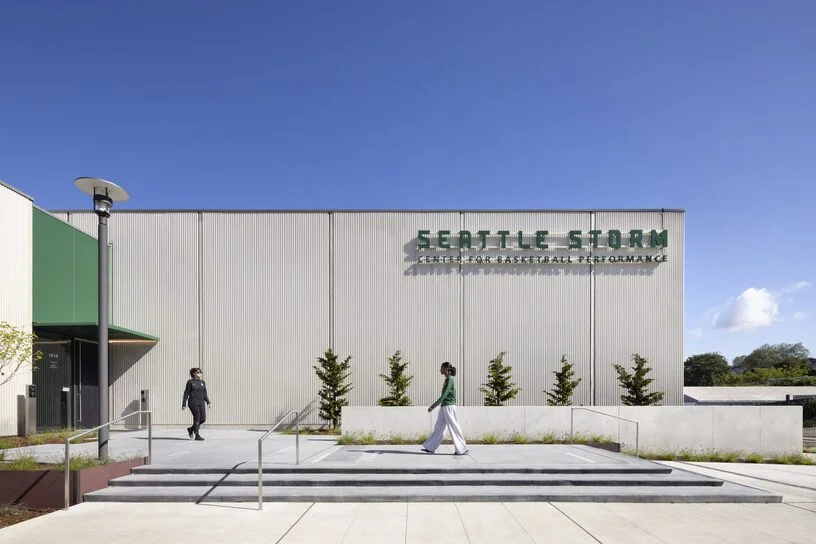
BECU Storm – Center for Basketball Performance
Seattle, WA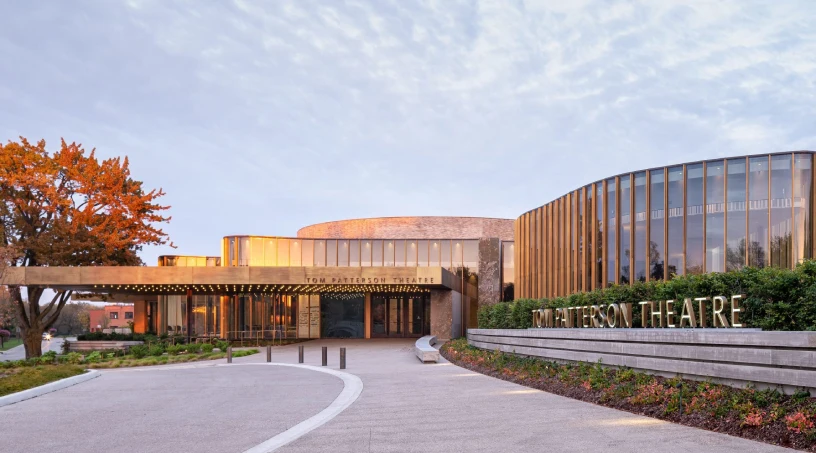
Tom Patterson Theatre
Stratford, ON